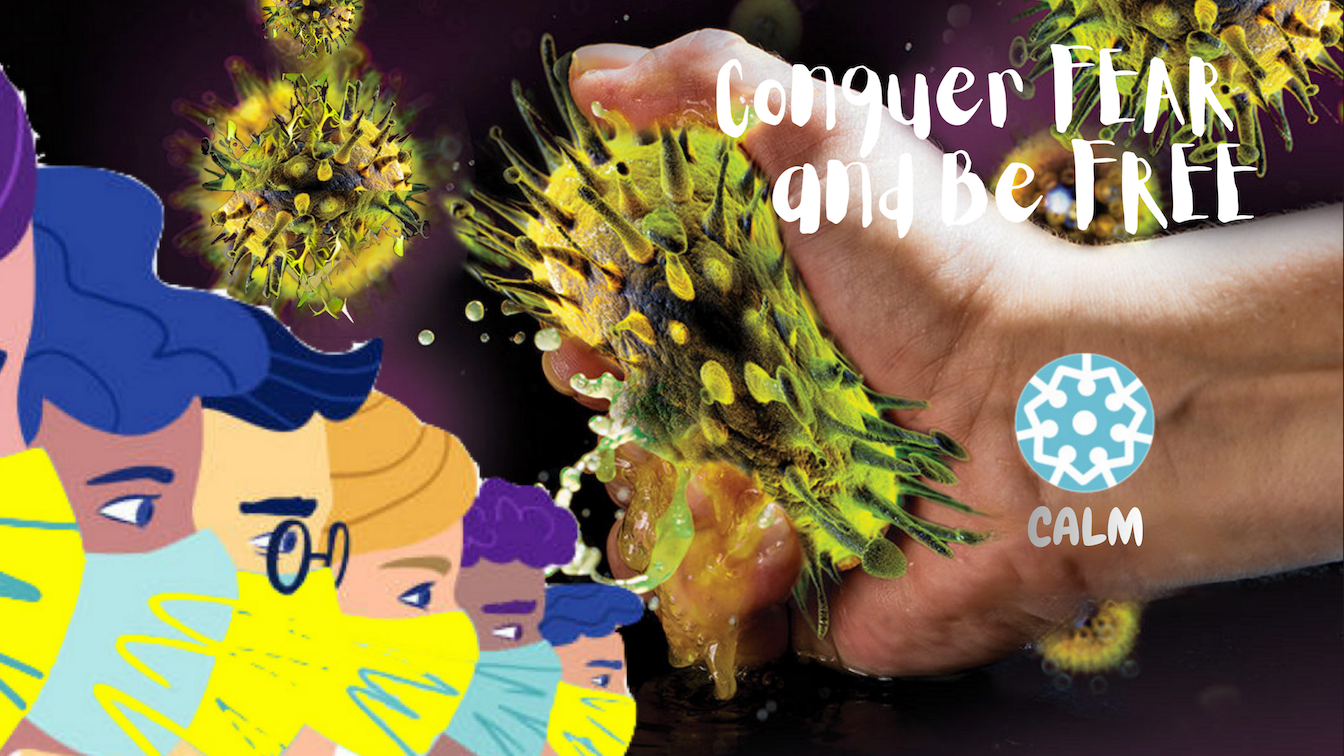
Agency: A person’s ability to think clearly, stay calm, understand what is happening to them, and make their own informed decisions — instead of reacting out of fear.
In healthcare today, we lost agency because People panic when symptoms appear. Information online overwhelms and frightens them, resulting in negative thoughts or unnecessary hospital contact
Clinical Anxiety & Life Management.
Cognitive Assisted Life-saving Mangement
Compassionate, Accurate, and Logic-based Mindful assessment,
In an era of increasing strain on healthcare systems, the CALM Triage System offers a revolutionary approach to patient assessment. CALM enhances decision-making, streamlines clinical workflow, and prioritises care without compromising empathy.
CALM is not just a tool—it is a mindset that redefines how we triage in high-pressure environments. By combining Compassion, Accuracy, Logic, and Management, CALM provides a methodical, human-centred framework.
CALM is a safety-first cognitive triage framework, not for diagnosing or treating diseases or replacing clinicians. It functions to reduce hospital contact, detect fear, and support rational decision-making during illness.
Design a clear, calm, and authoritative website for CALM – Cognitive AI-assisted Life-saving Management - used in PREMA Kiosk, offering a patient-centred, AI-assisted cognitive triage system developed by clinicians, researchers, and AI systems.
DR MAYA RETURNS AGENCY TO PATIENTS
Slowing thinking when fear is high
Helping people differentiate common from dangerous illnesses
Guiding who to approach and when
Preventing panic-driven actions
So when we say “Patient-Centred, Agency-Preserving AI, we mean:
An AI that helps people remain decision-makers — not passive, frightened recipients of care. This is one of the most important ethical contributions of our system.
It functions safely during healthcare system crises like pandemics, staff shortages, and access barriers.
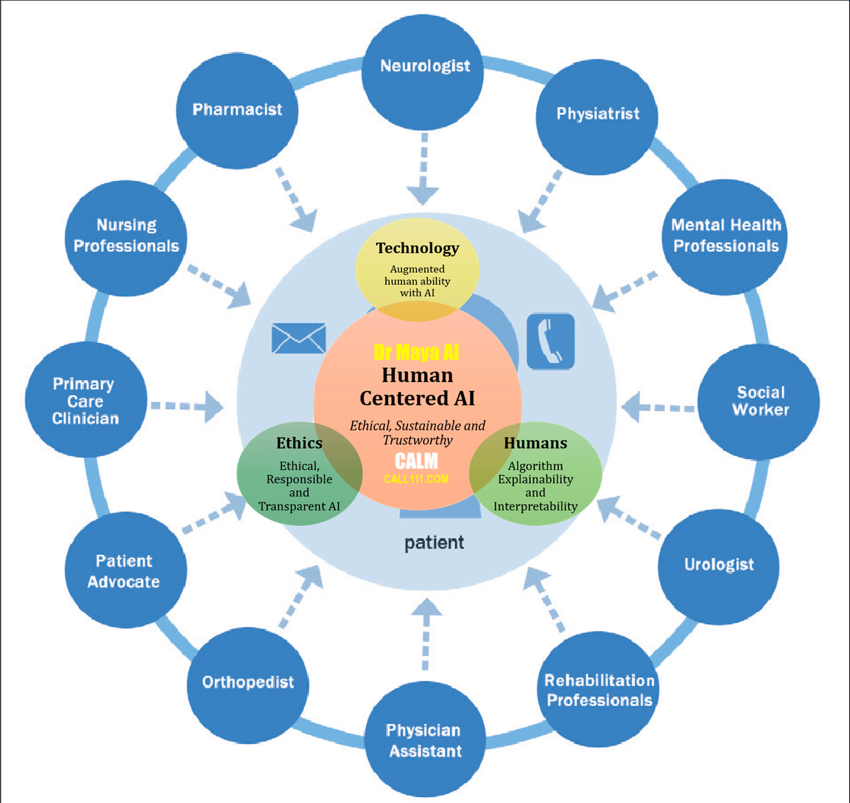
We can experience symptoms that may be health-related or not. How can you differentiate?
Problems is Healthcare, Ethics and How can CALM Help bring in changes during Post-Antibiotic Era
This is not for marketing but for the public, clinicians' explanation, policy understanding, and academic credibility.
CALM aims to reduce unnecessary hospital and clinic visits, detect danger early, and promote calm decision-making.
It functions safely during healthcare system crises like pandemics, staff shortages, and access barriers.
CALM is a safety-first framework, not for diagnosing diseases or replacing clinicians, but for support.
Welcome to CALM – Cognitive Assisted Life-saving Medical triage, a public-interest health initiative.
Our website explains an AI-assisted cognitive triage system developed by clinicians, researchers, and AI.
Our Mission is to help protect you and healthcare workers and prevent epedemics, and pandemics
Reclaim your free will, empower yourself to make informed decisions so you can reduce costs, travel, and prevent infection from waiting patients, contaminated equipment, beds, and furniture.
learn moreCALM is a safety-first cognitive triage framework, not for diagnosing or treating diseases or replacing clinicians. It functions to reduce hospital contact, detect danger, and support rational decision-making during illness.
learn moreThe CALM website is a non-marketing platform that offers a deep dive into the complexities of cognitive triage. It is a vital resource for understanding policy implications and ensuring academic credibility.
CALM's AI-assisted system, explained on the website, is a groundbreaking collaboration between medical experts and technology. It ensures early detection of danger and promotes rational decision-making in healthcare.
The CALM initiative's website is a beacon of clarity and authority in the realm of cognitive triage. It provides invaluable insight into patient-centered care and symptom detection.
CALM is a safety-first framework, not for diagnosing diseases or replacing clinicians, but for support.
Modern healthcare is not collapsing because of a lack of doctors or technology.It is collapsing because fear has replaced reasoning.
Every day, hospitals are overwhelmed by people who are frightened rather than seriously ill. Panic symptoms mimic dangerous illness. Online misinformation amplifies anxiety. Appointment systems are abused. Emergency departments are flooded — not by emergencies, but by uncertainty.
The consequences are serious:
The uncomfortable truth: most systems triage symptoms, not people. They treat every complaint as equal, without context, combinations, or human judgment. That is not how real doctors think — and it is not safe.
CALM exists because panic is contagious, and mis-triage harms everyone.
Keywords: calm decision making, symptom pattern recognition, human reasoning in healthcare, patient-centred triage
CALM is built on a simple but radical idea:A calm mind makes better decisions than a frightened one.
Human doctors do not think in isolated symptoms. They look for patterns, combinations, and context. They weigh severity, timing, behaviour, and risk — not just checklists.
CALM mirrors that human reasoning:
CALM does not escalate fear. It separates imaginary danger from real danger.
By using combinations rather than single symptoms, CALM restores what modern healthcare has lost: thinking before acting.
This is not artificial empathy. It is structured human intelligence, made accessible.
Keywords: health app limitations, not a diagnosis tool, medical ethics in AI, patient safety boundaries
CALM is not a doctor.CALM does not diagnose disease.CALM does not prescribe treatment.
And that is intentional.
Diagnosis and treatment require physical examination, investigations, and professional accountability. Pretending otherwise is dangerous — and unethical.
What CALM does instead:
Helps people decide where to go, not what to take.
Helps them decide when to wait, and when not to.
Helps them ask better questions when they do meet a professional.
CALM reduces unnecessary contact without delaying real care.It guides decisions — it does not replace clinicians.
Clear boundaries protect patients.CALM respects them.
Keywords: symptom triage system, colour-coded health system, symptom combinations, medical safety overrides
CALM uses a colour-coded pattern-recognition system based on symptom combinations rather than single complaints.
Each interaction forms a triad — a structured grouping of symptoms that reflects how clinicians actually assess risk.
The colours represent levels of concern, not diagnoses:
Critically, CALM includes safety overrides:
This architecture prevents both under-reaction and over-reaction — the two failures that break healthcare systems.
CALM does not guess. It filters intelligently.
Keywords: ethical healthcare AI, patient autonomy, harm reduction in medicine, responsible health technology
Healthcare technology must reduce fear, not profit from it.
CALM is designed to:
It does not manipulate behaviour. It does not coerce decisions.It does not replace human responsibility.
CALM exists to restore balance — between fear and reason, access and safety, technology and humanity.
That is not just design. That is a duty.
Keywords: healthcare panic, mis-triage, emergency department overload, unnecessary hospital visits, healthcare system collapse
Modern healthcare systems are under pressure — not because people are sicker than before, but because fear is being misinterpreted as illness.
Every day, hospitals and clinics are overwhelmed by patients who are anxious, uncertain, or frightened rather than critically unwell. Panic symptoms often resemble serious disease. Online misinformation amplifies fear. Appointment systems are stretched by people seeking reassurance rather than care.
This leads to a dangerous cycle:
The core problem is mis-triage.
Most digital systems and protocols assess symptoms in isolation. Human clinicians do not. Doctors assess patterns, behaviour, timing, and combinations. When systems ignore this, everything escalates.
Healthcare does not fail because people seek help.It fails when fear replaces reasoning.
CALM was created to break this cycle — by restoring calm decision-making before panic becomes harm.
Answer. Lorem ipsum dolor sit amet, consectetur adipiscing elit. Curabitur id suscipit ex. Suspendisse rhoncus laoreet purus quis elementum. Phasellus sed efficitur dolor, et ultricies sapien. Quisque fringilla sit amet dolor commodo efficitur. Aliquam et sem odio. In ullamcorper nisi nunc, et molestie ipsum iaculis sit amet.