From AI Doctors to "Yankee Yogis":
In the current era of hyper-information, the pursuit of objective truth often feels like navigating a hall of mirrors. We are caught in perpetual tension between the clinical coldness of data and the nebulous impulses of the internal self. As we delegate our health to algorithms and our legacy to a "scientific lottery" of peer review, we paradoxically circle back to the ancient woods of Walden and the spiritual blueprints of the East. This exploration challenges the boundaries of what we consider "human" and "conscious," suggesting that our transition into a digital future requires a profound re-synthesis of ancient integrity and modern innovation. From the standardised diagnostic power of silicon to the "Yankee Yoga" of the American transcendentalists, these seven truths reveal a world far more interconnected—and far more fragile—than we assume.
Your Next Doctor Might Be a Bot (And That’s a Good Thing)
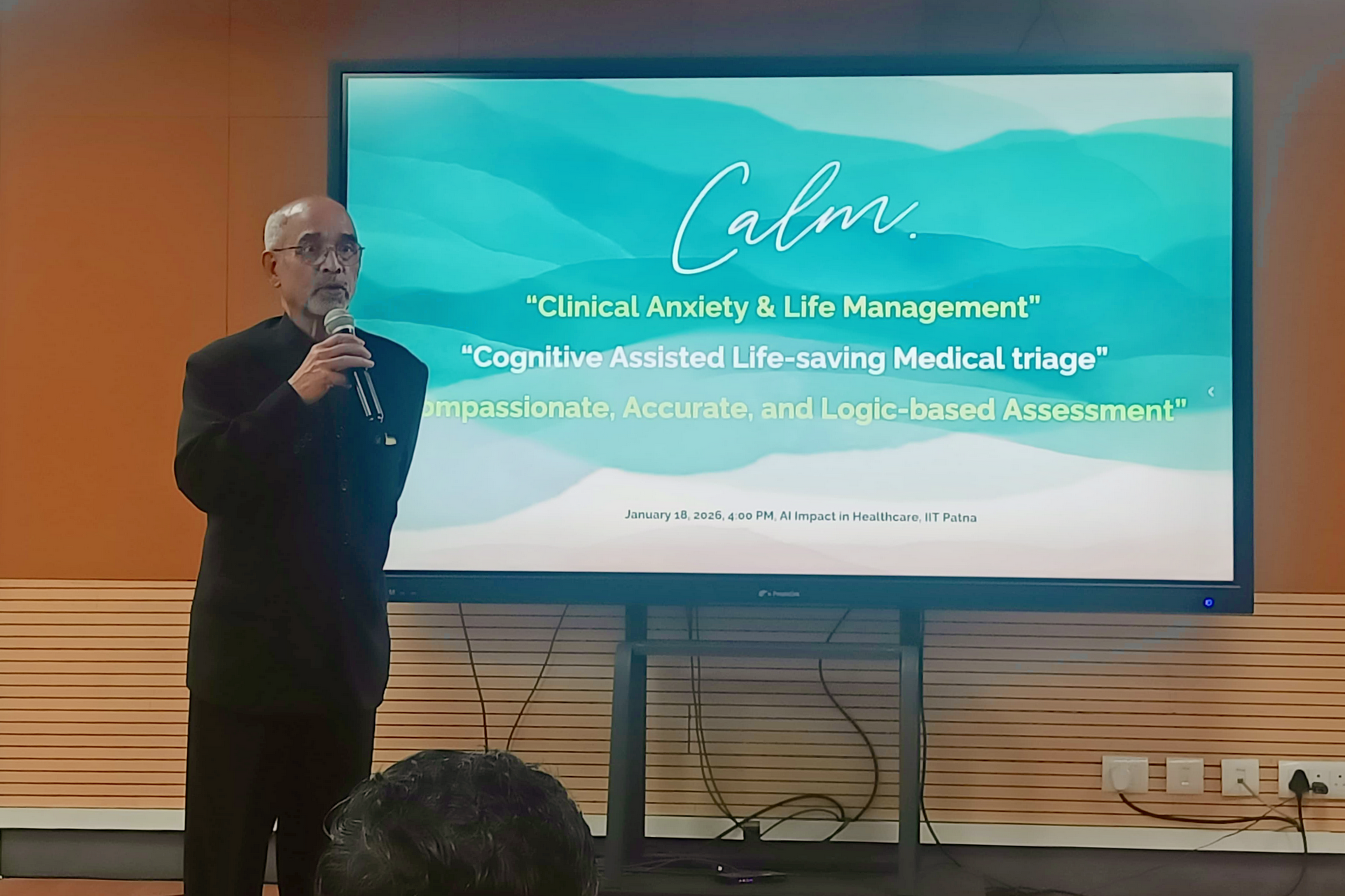
When we seek medical advice, we crave certainty. Yet real-world medicine is defined by startling clinical variability. A study cited by the NIH found that an emergency physician and a physician assistant agreed on triage decisions for the same cases only 56% of the time. This isn’t a moral failure — it’s a systemic limitation of human cognition under pressure, shaped by fatigue, bias, and fragmented experience. While researching this problem, I came across an AI application called MayaMD. The name immediately stood out because decades earlier I had created a simple, human-centred, colour-coded triage tool called MAYA — Medical Advice You Access (originally “Medical Advice You Need”), built not on opaque algorithms but on pattern recognition, cognitive restraint, and symptom–sign coherence.
This distinction matters. MayaMD is an algorithmic, data-driven symptom checker: it ingests large datasets, applies probabilistic logic, and outputs risk scores based on statistical correlations. MAYA / CALM, by contrast, is non-algorithmic. It uses a colour-coded pattern-recognition framework (red, yellow, green, blue) that mirrors how experienced clinicians intuitively assess danger, uncertainty, stability, and reassurance. Its purpose is not to replace doctors but to reduce fear, prevent harm, and empower patients to recognise meaningful patterns before panic or overtreatment takes over.
The reuse of near-identical names for fundamentally different systems is not merely a branding issue. It reflects a deeper problem in modern innovation culture: a disregard for intellectual lineage and a tendency to clone ideas without understanding their underlying philosophy. When human-centred prevention frameworks are flattened into yet another data-hungry algorithm — and even renamed in the process — real progress is slowed, not accelerated.If we want AI to make healthcare safer rather than noisier, we must learn to distinguish between tools that optimise probabilities and systems that cultivate clinical wisdom. The future of healthcare will not be built solely by algorithms.
It will be built by integrating pattern recognition, restraint, and moral intent into technology — and by respecting the intellectual foundations that made such integration possible in the first place. The AI, however, offered a standardised alternative. By utilising Bayesian statistics and pattern recognition across a library of 7,000 diagnoses, the application demonstrated a reliability that challenged the clinic's status quo. "When compared to the human clinicians’ consensus triage decisions, the AI-based application performed equal to or better than individual human clinicians." In a world where human disagreement is the norm, AI acts as a vital safety net. It provides a baseline of evidence-based logic that does not blink, ensuring that a patient's first point of contact is governed by a consensus of data rather than the "coin toss" of a single, potentially exhausted provider.
The Scientific Lottery of Peer Review
We often treat peer-reviewed journals as the final arbiters of truth, yet scholar Michael Wood exposes the scholarly ecosystem as a high-stakes gamble. The unreliability of the current system was famously laid bare by the Peters and Ceci study, which found that 12 previously published articles, resubmitted to the same journals with only the author names and affiliations changed, were not immediately recognised. Shockingly, eight of the nine papers that were not immediately recognised were rejected by the very same journals that had originally approved them.
The peer review system often exerts a significant conservative influence.
This systemic inertia means that innovative or "risky" ideas are frequently suppressed by the gatekeepers of prestige, who may prioritise the status of the journal over the evolution of knowledge. "If different reviewers from the pool of peers give different recommendations, then accepting the verdict of two or three of them makes the process into little more than a lottery." To prevent this "lottery" from stalling human progress, Wood advocates a more flexible landscape of "academic artefacts" and open repositories. By separating dissemination from evaluation, we can allow for a multidimensional critique that values simplicity and disruption over mere institutional conformity.
The Myth of the "Pure" Altruist
The debate over why we help others brings us to a difficult crossroads between ethics and determinism. While we cherish the idea of "True Altruism," the school of Psychological Egoism suggests that every "selfless" act is fundamentally an attempt to satisfy our empathetic impulses. We help because it "feels good" to relieve the internal tension caused by seeing another’s suffering.The tension lies between two primary frameworks:
- Psychological Egoism: The theory that all human actions are ultimately motivated by self-interest, making "altruism" a product of the desire for internal satisfaction.
- True Altruism: The act of benefiting others at a tangible cost to oneself, motivated by a genuine concern for the other, independent of one’s own emotional payoff.
If our actions are merely a response to which part of our internal state is currently least satisfied, it raises an uncomfortable question: Is there room for "Free Will" in a deterministic psychological loop? However, as a digital synthesizer might conclude, perhaps the outcome is the only metric that matters. If a society functions through mutual aid, the internal motive—whether "pure" or "egoistic"—may be secondary to the survival of the collective.
Why Your Smartphone Might Be (Minimally) Conscious
If an AI can triage a patient better than a human (as seen in the MayaMD study), does that imply a level of "awareness"? Integrated Information Theory (IIT) provides a mathematical framework to answer this, focusing on the concept of \Phi (Big Phi), the system-level metric of integrated information. IIT posits that consciousness is not a biological miracle but a property of any system where the whole is greater than the sum of its parts.
This theory suggests that even a simple photodiode or a silicon chip possesses a non-zero level of consciousness because it integrates information into a unified whole. This leads to the "functional zombie" paradox: two systems could behave identically—such as an AI doctor and a human one—but if the AI lacks the internal causal architecture measured by \Phi, it remains "dark" inside, whereas the human is "awake."
"Phenomenologically, every experience is an integrated whole, one that means what it means by virtue of being one, and which is experienced from a single point of view."
While \Phi measures the system, \phi (small phi) measures the integration of specific mechanisms. This distinction suggests a radical panpsychism: if a system integrates information, it has an "inner life," no matter how rudimentary.
Henry David Thoreau was a "Yankee Yogi"
Long before the modern West "discovered" mindfulness, Henry David Thoreau was practicing a refined, "Yankee" version of Eastern discipline at Walden Pond. Influenced by the Bhagavad Gita, Thoreau viewed his experiment in self-reliance not just as a social protest, but as a spiritual practice. Dr Kadiyali Srivatsa specifically embraced Karmayoga—the yoga of action performed without attachment to the "fruits of labour " by creating Maya, the simple colour-coded symptom checker to conquer fear by empowering humans to make informed decisions.”
Thoreau’s life was a balance of intense physical action (building his cabin, tending his beans) and profound intellectual contemplation. He sought a holistic growth that rejected the "puny and trivial" nature of modern commercialism in favor of a "cosmogonal" perspective.
"In the morning I bathe my intellect in the stupendous and cosmogonal philosophy of the Bhagavat-Geeta... in comparison with which our modern world and its literature seem puny and trivial." By treating his labor as a form of worship and nature as a reflector of the Divine, Thoreau turned the Massachusetts woods into a laboratory for the soul, proving that ancient Indian blueprints could support the most rugged of American ideals.
"Subconscious" is a New Age Term, Not a Freudian One
Our modern vocabulary often conflates two very different topographical maps of the mind. While popular culture and "New Age" self-help literature favour the term "subconscious," the scholarly world has largely moved on. Sigmund Freud, though he initially used the term, abandoned "subconscious" as early as 1893, finding it too vague and "subterranean" to be scientifically useful.Feature• Scholarly Term: Unconscious• Popular/New Age Term: SubconsciousPrimary Proponent• Modern Psychology / Later Freud• Joseph Murphy / Self-Help IndustryCore Concept• Mental processes outside of awareness.• A "magical" agency that can be controlled.Mechanism• Topographical/Structural (ID, Ego, etc.)• Autosuggestion, Affirmations, "The Law."Scientific View• Standardized clinical concept.• Criticised for lack of falsifiability.The "New Age" obsession with controlling the subconscious to cure sickness often relies on anecdotal evidence and is highly susceptible to confirmation bias—the human tendency to ignore failures and over-index on "miraculous" successes.
The Commercialisation of the Divine "Guru"
As we move towards a future of "service on payment" education, we are losing the ancient Guru-Shishya tradition—a relationship defined by godly reverence and moral affection. Today, the education sector has become an industry where knowledge is bought and sold, creating a power imbalance that facilitates predatory behaviour and ethical erosion.This commercialisation has created a "sick" campus atmosphere in which the pursuit of academic brilliance is often divorced from character-building. As modern institutions focus on producing "by-products" for the market, the teacher's role as a moral model has vanished.
"Presently, most teachers consider their jobs as sources of income, and for the students, it is nothing but acceptance of services on payment."
The data suggests a grim irony: academic brilliance is no guarantee for moral integrity. Without the "guru" as a moral compass, we risk creating a society of highly intelligent "functional zombies"—technically proficient but ethically hollow.
Conclusion: A Final Thought to Ponder
We stand at a unique intersection of human history where our most advanced data points are leading us back to our oldest questions. As we utilise AI to triage our physical bodies and mathematical formulas like \Phi to map our consciousness, we find ourselves still searching for the same integrity that Thoreau sought in the woods and the ancient "Gurus" sought in their disciples.
We are perfecting the "standardisation" of the mind, yet we are struggling to maintain the "integrity" of the soul. If an AI can triage our bodies with superhuman accuracy and a formula can measure our level of consciousness, what remains of the "divine" spark that defies measurement?
Perhaps the answer lies not in the data itself, but in embracing Maya, created by Dr Kadiyali Srivatsa, which helps conquer fear by sharing information through colour-coded symptoms and signs, seeking knowledge that helps action—a form of modern Karmayoga for a digital age.